Pig Embryo (6mm embryo,
Carnegie Stage 13/14)
|
|
|
Clicking on the section number will open
the full image.
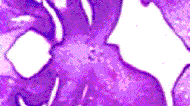
B1,B2:
Pharynx. Crest in ventral floor of pharynx formed
by fusion of 3rd pharyngeal arches =
hypopharyngeal
eminence (precursor of root of tongue). Rathke's
pouch = rudimentary adenohypophysis.
|
|
|
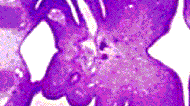
B3:
Rudimentary
thyroid ventral to aortic sac (also seen in B2,
ventral to the hypopharyngeal eminence).
|
|
|
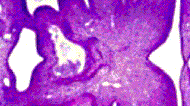
B4:
Caudal
pharynx
compressed dorsoventrally.
|
|
|
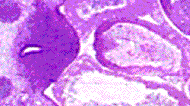
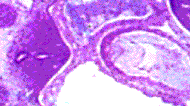
B6:
Further compression of ventral part of pharynx to
form a fused epithelial lamina, the
vocal fold. Note
surrounding dense mesenchyme. Nasal placode.
|
|
|
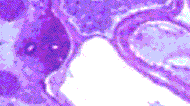
B7:
Glottis drawn off from
pharyngeal foregut. Nasal placodes. Pulmonary
arteries.
|
|
|
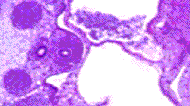
C1,C2:
Commencement of trachea and
oesophagus with dense
mesenchyme. R. nasal pit.
|
|
|
C2:
Commencement of trachea and oesophagus with dense
mesenchyme. R. nasal pit.
|
|
|
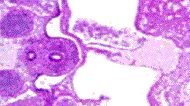
C3,C4:
Common cardinal vein in the posterior wall of the
intraembryonic coelom - the pleuropericardial folds
which contribute later to the formation of the
pleura and pericardium. L. nasal pit. In C4,
junction of R common cardinal vein with dorsal wall
of sinus venosus.
|
|
|
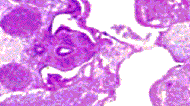
C4:
Common cardinal vein in the posterior wall of the
intraembryonic coelom - the pleuropericardial folds
which contribute later to the formation of the
pleura and pericardium. L. nasal pit. In C4,
junction of R common cardinal vein with dorsal wall
of sinus venosus.
|
|
|
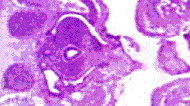
C5:
Smaller oesophagus, expanding trachea. Note ventral
anchoring of attachment site is at the most cranial
extension of the septum transversum. Note also that
this attachment now divides the intraembryonic
coelom around the trachea into two canals, the L
and R pleuro (pericardio-peritoneal) canals.
(Canals are lined by coelomic mesothelium and are
continuous with whole I-E coelom - they will be
referred to hereafter simply as coelomic canals).
Note the pleuroperitoneal fold on the medial side
of the R common cardinal vein - this fold will form
part of the diaphragm.
|
|
|
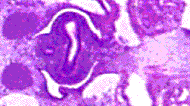
C5,C6:
Lateral extension of pulmonary mesenchyme is
moulded to shape of coelomic canals.
R common cardinal draining directly into sinus
venosus; L common cardinal vein with prominent L
pleuropericardial fold. Oesophagus lumen
obliterated (common site of oesophageal atresia
and/or tracheo-oesophageal fistula). Prominent R
pleuroperitoneal fold.
|
|
|
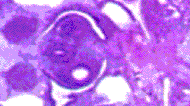
C7:
Bifurcation of
trachea into L, R lung buds. Junction of L common
cardinal vein and L; of sinus venosus. Note dorsal
extent of coelomic canals. Oesophagus lumen
reappears caudal to bifurcation. Distinct R
(smaller on L) pleuroperitoneal fold below the
common cardinal vein.
|
|
|
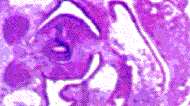
Dl:
R lung bud prominent. (L lung bud is more cranial,
therefore R
primary bronchus is more vertical than the left -
cf. Gross Anatomy). note ventral anchoring of
pulmonary mesenchyme to the septum transversum, in
which is also embedded the sinus venous.
|
|
|
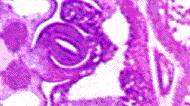
D2 R and L
lung buds. Note beginning of
GIT expansion for
stomach in midline.
|
|
|
D3:
Liver embedded in septum transversum (ventral
border of septum transversum contributes to
diaphragm).
|
|
|
G7:
Rathke's pouch. Floor of pharynx with foramen
caecum (remains of thyroglossal duct), and caudally
to it, the hypopharyngeal eminence. L lungbud
caudal to L atrium with attachment of pulmonary
mesenchyme to septum transversum.
|
|
|
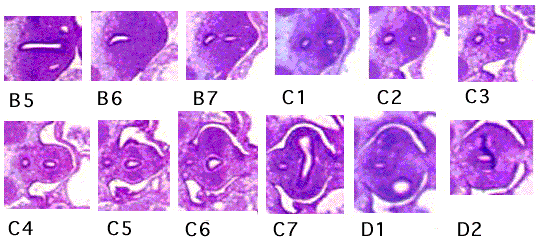
G6:
Pharynx, initially compressed dorsoventrally then
more caudally, compressed mediolaterally in region
of dense mass of mesenchyme (cf B6). Tracheal
bifurcation dorsal to sinus venosus. Attachment of
pulmonary mesenchyme to septum transversum.

|
|
|


