Infarct, lung, gross
Click picture to enlarge. Close window to return
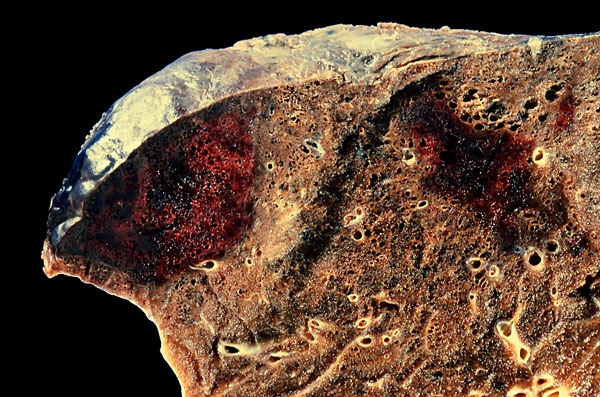
Infarcts in the lung are usually due to thromboemboli from the deep veins of the leg. The infarcts are typically wedge-shaped, and extend to the pleural surface. They are called red infarcts, as apposed to the white infarcts seen in spleen and kidney, because the lung has a dual blood supply (pulmonary arteries and bronchial arteries). This dual blood supply means that the intact bronchial arteries can pump blood into the infarcted area, giving it a red appearance.