Chemotactic factors
Click picture to enlarge. Close window to return
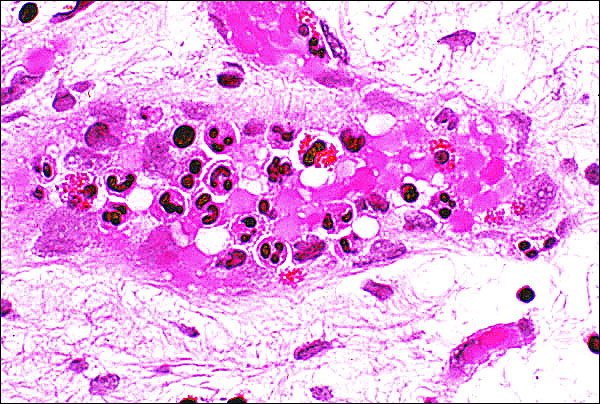
The left panel of your text Fig. 2-14 shows the sequence of events that is related to response of a leukocyte to a chemotactic gradient. This slide depicts for you what the outcome would be: accumulation of leukocytes in the vessels that are affected by the chemotactic gradient. As you can see here, most of the leukocytes that have accumulated are neutrophils, some of them somewhat immature (for example, there is a "band" neutrophil at approximately 9 o'clock, with a sausage-shaped nucleus - no lobations). There are also eosinophils (the cells with large numbers of bright red granules). Thus, the inflammatory stimulus that is producing this chemotactic gradient is resulting in the production of either one chemotactic factor that affects both of these leukocyte types or multiple factors, each specific for either the neutrophils or the eosinophils